Source Customized Handmade Bobble Head Figurine for Office, Home, and Holiday Gifts
Compare 30 customized handmade bobble head figurine options from verified suppliers. Buyers can review details on materials like polyresin and resin, processing methods including hand-made and machinery, and usage scenarios for office, home, and holiday gifts.
Key considerations
Products List


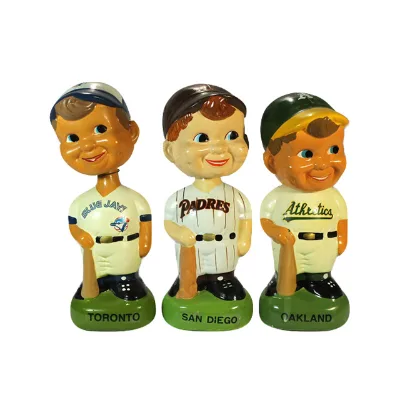
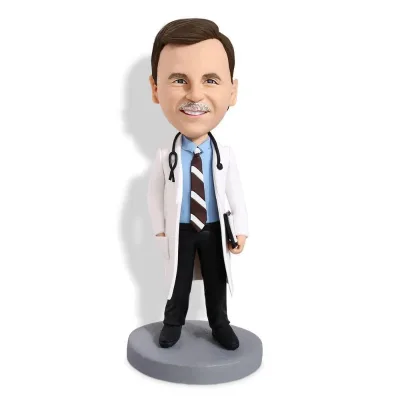
Comprehensive Sourcing Guide
Strategic Sourcing Guide for Customized Handmade Bobble Head Figurines
Navigating the B2B market for customized handmade bobble head figurines requires a disciplined approach that balances creative customization with rigorous supply chain verification. These items serve as high-impact promotional tools, corporate gifts, and collectibles, yet their production involves complex manufacturing steps ranging from hand-molding to machinery-assisted finishing. Buyers must distinguish between generic mass-produced items and true handmade variants, as the latter often command different pricing structures, lead times, and quality assurance protocols. This guide synthesizes available product attributes and industry standards to provide a framework for evaluating suppliers and defining procurement specifications without relying on unverified market claims.
Technical Specifications and Material Composition
The foundation of a successful procurement order lies in defining precise technical specifications. The core material for bobble head figurines is frequently resin or polyresin, offering a balance of durability and the ability to capture fine details. In the observed product data, specific models utilize polyresin (model f2445) and general resin (model b01), indicating that material selection is a critical variable. Buyers should verify whether the supplier uses high-density polyresin for better structural integrity, especially for larger figures, or standard resin for cost-effective small batches.
Dimensions vary significantly across the product spectrum. Observed specifications include a height of 25.3cm for certain sculptures and standardized packaging dimensions such as 75.515.5cm or 6.56.517.5cm for specific bobble head models. When sourcing, it is essential to confirm the exact scale, as some products are listed with a "1/4 scale" standard, while others adhere to specific centimeter measurements. The production process is equally diverse; while some items are cast using machinery, others are explicitly marked as "Hand-Made" with "Full Round Carving" techniques. This distinction affects the final aesthetic and the cost per unit. Hand-made items typically exhibit unique surface textures and slight variations that mass-produced items lack, a factor that must be aligned with the buyer's brand identity.
Customization Capabilities and Production Processes
The primary value proposition for this category is customization. The available data confirms that "Customization" and "Customized" options are available, allowing buyers to tailor the figurine's appearance to specific corporate logos, character designs, or holiday themes. The production workflow often involves a multi-stage approach. The initial stage may involve casting, followed by surface treatments such as painting or polishing. For instance, some products feature a "Painted" surface treatment, while others undergo a "Polished" finish to achieve an antique or natural look.
Buyers must clarify the extent of customization required. Does the supplier offer full-body customization, or is the customization limited to the head or specific accessories? The data indicates that some models are designed as "Bobble Head Figurines" with specific packaging requirements like "Poly Bag" or "Styrefoam+Carton." The choice of processing method—whether "Machinery" or "Hand-Made"—directly influences the lead time and the level of detail achievable. Hand-made processes, often associated with "Full Round Carving," suggest a higher degree of artisanal input, which is crucial for high-end collectibles or premium corporate gifts. However, this also implies a higher maintenance requirement and potentially longer production cycles compared to purely machine-cast items.
Compliance, Certification, and Safety Standards
In the B2B sector, compliance is non-negotiable, particularly for products intended for children or general public distribution. The observed product data lists "CE" certification as a standard for certain models (e.g., model b01). The CE mark indicates conformity with health, safety, and environmental protection standards for products sold within the European Economic Area. Buyers must verify that the specific customized design they order retains this certification status, as adding custom paints or materials can alter the chemical composition and potentially void existing certifications.
Furthermore, the origin of the product plays a role in compliance. The data points to "China" and "Fujian" as production origins. Sourcing from these regions requires a thorough understanding of local export regulations and international trade compliance. While the data mentions "CE" as a standard, it does not explicitly list other certifications such as ASTM (for the US market) or EN71 (for toys). Buyers should not assume that a product certified for one market is automatically compliant for another. It is imperative to request current test reports and certificates of origin for every batch, ensuring that the customized elements do not introduce hazardous substances like lead or phthalates, which are strictly regulated in many jurisdictions.
Cost Drivers and Minimum Order Quantities
Understanding the cost structure is vital for budgeting and negotiating. The observed price range for these items spans from $0.10 to $40.00 USD, a wide variance that reflects differences in size, material quality, and the complexity of customization. Several factors drive these costs. First, the "MOQ" (Minimum Order Quantity) varies significantly, with observed ranges from 1 to 2000 units. Specific models in the data show MOQs of 300 units or 500 pieces, which can impact the per-unit cost. Larger orders typically benefit from economies of scale, reducing the cost of tooling and setup.
Lead times are another critical cost driver. The data indicates a delivery time of approximately 20 days for certain customized orders. This timeline includes the production cycle and shipping preparation. Buyers should also consider the "Sample Time," which is noted as 3 days in some cases, and the "Sample Cost," which can be free. Utilizing free samples is a strategic move to verify quality before committing to a large order, but buyers must account for the shipping costs associated with these samples. Additionally, the "Maintenance Requirement" is listed as "High" for some items, suggesting that the cost of ownership includes potential long-term care or replacement, which should be factored into the total cost of ownership analysis.
Supplier Evaluation and Quality Control Protocols
Selecting the right supplier requires a multi-faceted evaluation strategy. Buyers should prioritize suppliers who demonstrate transparency in their production processes. The distinction between "Hand-Made" and "Machinery" processing is a key indicator of a supplier's capability. A supplier claiming "Hand-Made" status should be able to provide evidence of artisanal involvement, such as photos of the carving process or descriptions of the "Full Round Carving" techniques used. Conversely, suppliers relying on "Machinery" processing should demonstrate consistency in their casting and painting lines.
Quality control (QC) protocols must be rigorous, especially for items intended as "Business Gifts" or "Holiday Gifts." The data mentions various packing methods, including "Styrefoam," "Sponge+White Box," and "Poly Bag." The choice of packaging is a direct reflection of the supplier's commitment to protecting the product during transit. For fragile items like resin bobble heads, the use of double-layered packaging (e.g., "Styrefoam+Carton") is essential to prevent damage. Buyers should establish a clear QC checklist that includes visual inspections for paint smudges, structural integrity of the bobble mechanism, and adherence to the agreed-upon dimensions. Regular third-party inspections during the production phase can mitigate the risk of receiving substandard goods.
Typical Applications and Market Positioning
The versatility of customized handmade bobble head figurines makes them suitable for a wide array of applications. The observed usage categories include "Business Gift," "Holiday Gifts," "Art & Collection," and "Home Decoration." This broad applicability allows buyers to target multiple market segments with a single product line. For corporate clients, these items serve as memorable branding tools, often featuring company mascots or key personnel. In the "Art & Collection" sector, the "Natural" or "Antique" styles, combined with "Full Round Carving," appeal to collectors seeking unique pieces.
The "Suitable For" attributes also highlight "Office" and "Home" environments, indicating that these figurines are designed to be durable enough for daily display. When positioning the product, buyers should consider the target audience's expectations. A "Business Gift" requires a premium finish and elegant packaging, while a "Holiday Gift" might prioritize festive colors and thematic designs. The "Style" attribute, ranging from "Natural" to "Antique," suggests that buyers can curate a collection that fits specific aesthetic preferences. Understanding these applications helps in selecting the right supplier who specializes in the desired style and usage scenario.
Long-Term Procurement and Relationship Management
Establishing a long-term partnership with a supplier is crucial for maintaining consistency and managing costs over time. The data shows that some suppliers offer "Customize" package options, which can be leveraged for future orders. Buyers should negotiate terms that allow for flexibility in order quantities and lead times, especially for seasonal peaks like "Holiday Gifts." The "Delivery Time" of 20 days should be treated as a baseline, with contingency plans for potential delays.
Relationship management also involves clear communication regarding changes in design or specifications. Since the production process involves both "Casting" and "Surface Treatment," any modification to the design can impact the entire workflow. Buyers should maintain open lines of communication with the supplier to ensure that customizations are executed precisely. Additionally, monitoring the "Maintenance Requirement" of the products can help in advising end-users on care, thereby reducing returns and enhancing brand reputation. By focusing on these long-term considerations, buyers can secure a reliable supply chain that supports their strategic goals in the competitive market of promotional and collectible items.
FAQs
What materials are used for customized handmade bobble head figurines?
These figurines are primarily made from polyresin or general resin. Specific models like f2445 use polyresin while others use standard resin, offering a balance of durability and fine detail capture for collectibles.
Can buyers customize the appearance of these bobble head figurines?
Yes, customization options are available for these items. Buyers can tailor the figurine's appearance to specific corporate logos or designs, with some models explicitly marked as customized for unique branding needs.
What is the typical lead time for producing these figurines?
The delivery time for customized orders is approximately 20 days. This timeline covers the production cycle including casting and surface treatments like painting or polishing before shipping preparation begins.
Which certifications are available for these resin figurines?
Some models carry CE certification to indicate conformity with safety standards. Buyers must verify that specific customized designs retain this certification status as adding custom elements can alter chemical composition.
How does the production process differ between handmade and machine-made options?
Production varies between machinery-assisted casting and hand-made processes with full round carving. Hand-made items offer unique textures and variations suitable for premium collectibles, while machine processing ensures consistency for mass orders.
What are the minimum order quantities for these figurines?
Minimum order quantities range from 1 to 2000 units depending on the supplier and model. Specific models in the data show MOQs of 300 or 500 pieces, impacting the per-unit cost significantly.
Where are these customized figurines typically manufactured?
Products originate from China, with specific production noted in the Fujian region. Sourcing from these areas requires understanding local export regulations and ensuring international trade compliance for all batches.